
Something I keep up my sleeve (not literally) for managing some life-threatening vascular wounds prior to surgery is the use of a balloon catheter like a foley to tamponade haemorrhage. This paper looks at series of such attempts although they state: “Except for the base of the skull (naso/oropharynx), all catheters were de- ployed in the operating room.“, so not exactly emergency medicine / pre-hospital practice, but a useful reminder that this is an option when going immediately to the operating room isn’t:

BACKGROUND: : Balloon catheter tamponade is a valuable technique for arresting exsanguinating hemorrhage. Indications include (1) inaccessible major vascular injuries, (2) large cardiac injuries, and (3) deep solid organ parenchymal bleeding. Published literature is limited to small case series. The primary goal was to review a recent experience with balloon catheter use for emergency tamponade in a civilian trauma population.
METHODS: : All patients requiring emergency use of a balloon catheter to tamponade exsanguinating hemorrhage (1998-2009) were included. Patient demographics, injury characteristics, technique, and outcomes were analyzed.
 RESULTS: : Of the 44 severely injured patients (82% presented with hemodynamic instability; mean base deficit = -20.4) who required balloon catheter tamponade, 23 of the balloons (52%) remained indwelling for more than 6 hours. Overall mortality depended on the site of injury/catheter placement and indwelling time (81% if <6 hours; 52% if ≥6 hours; p < 0.05). Physiologic exhaustion was responsible for 76% of deaths in patients with short-term balloons. Mortality among patients with prolonged balloon catheter placement was 11%, 50%, and 88% for liver, abdominal vascular, and facial/pharyngeal injuries, respectively. Mean indwelling times for iliac, liver, and carotid injuries were 31 hours, 53 hours, and 78 hours, respectively. Overall survival rates were 67% (liver), 67% (extremity vascular), 50% (abdominal vascular), 38% (cardiac), and 8% (face). Techniques included Foley, Fogarty, Blakemore, and/or Penrose drains with concurrent red rubber Robinson catheters. Initial tamponade of bleeding structures was successful in 93% of patients.
CONCLUSIONS: : Balloon catheter tamponade can be used in multiple anatomic regions and for variable patterns of injury to arrest ongoing hemorrhage. Placement for central hepatic gunshot wounds is particularly useful. This technique remains a valuable tool in a surgeon’s armamentarium.
A Decade’s Experience With Balloon Catheter Tamponade for the Emergency Control of Hemorrhage
J Trauma. 2011 Feb;70(2):330-3
Yearly Archives: 2011
ILCOR neonatal cooling guideline
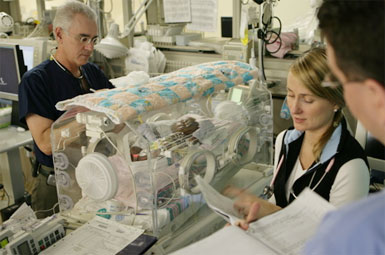
On the basis of the published data to date the Neonatal Task Force of the International Liaison Committee on Resuscitation (ILCOR) made the following recommendation on February 2010 with regard to therapeutic hypothermia:
- Newly born infants born at term or near-term with evolving moderate to severe hypoxic-ischemic encephalopathy should be offered therapeutic hypothermia.
- Whole-body cooling and selective head cooling are both appropriate strategies.
- Cooling should be initiated and conducted in neonatal intensive care facilities using protocols consistent with those used in the randomized clinical trials i.e. commence within 6 h, continue for 72 h and rewarm over at least 4 h.
- Carefully monitor for known adverse effects of cooling – thrombocytopenia and hypotension.
- All treated infants should be followed longitudinally.
Therapeutic hypothermia following intrapartum hypoxia-ischemia. An advisory statement from the Neonatal Task Force of the International Liaison Committee on Resuscitation
Resuscitation 2010;81(11):1459-1461
Time lapse: The spinning Chilean sky
From the wonderful Bad Astronomy blog:
This timelapse video shows four of the ALMA microwave antennas in Chile as they scan the night sky, while the starry vault rotates around them. Read more…
Difficult tube – Easytube
French pre-hospital physicians included the Easytube, which is similar to the Combitube, in their difficult airway algorithm. They describe the insertion method as:
“ ..inserted blindly, the patient’s head must be in neutral position. Manually opening the patient’s mouth and pressing the tongue gently toward the mandible, the tube is inserted parallel to the frontal axis of the patient until the proximal black ring mark is positioned at the level of the incisors. If the EzT is inserted blindly, the tip is likely to be positioned in the esophagus with a probability of more than 95% [3]. Ventilation of the patient should be performed using a colored lumen, and the transparent lumen can then be used to insert a gastric tube or to drain gastric contents.”
The authors suggest that the main advantages of the Ezt are: shorter insertion time for Ezt than for ETI, better protection against aspiration than a laryngeal mask and the possibility of blind insertion of the Ezt in patients trapped in a sitting position.
BACKGROUND: Securing the airway in emergency is among the key requirements of appropriate prehospital therapy. The Easytube (Ezt) is a relatively new device, which combines the advantages of both an infraglottic and supraglottic airway.
AIMS: Our goal was to evaluate the effectiveness and the safety of use of Ezt by emergency physicians in case of difficult airway management in a prehospital setting with minimal training.

METHODS: We performed a prospective multi-centre observational study of patients requiring airway management conducted in prehospital emergency medicine in France by 3 French mobile intensive care units from October 2007 to October 2008.
RESULTS: Data were available for 239 patients who needed airway management. Two groups were individualized: the “easy airway management” group (225 patients; 94%) and the “difficult airway management” group (14 patients; 6%). All patients had a successful airway management. The Ezt was used in eight men and six women; mean age was 64 years. It was used for ventilation for a maximum of 150 min and the mean time was 65 min. It was positioned successfully at first attempt, except for two patients, one needed an adjustment because of an air leak, and in the other patient the Ezt was replaced due to complete obstruction of the Ezt during bronchial suction.
CONCLUSION: The present study shows that emergency physicians in cases of difficult airway management can use the EzT safely and effectively with minimal training. Because of its very high success rate in ventilation, the possibility of blind intubation, the low failure rate after a short training period. It could be introduced in new guidelines to manage difficult airway in prehospital emergency.
The Easytube for airway management in prehospital emergency medicine
Resuscitation. 2010 Nov;81(11):1516-20
Pre-hospital Echo
Pre-hospital physicians in Germany performed basic echo on patients with symptoms either of profound hypotension and/or severe dyspnoea/tachypnoea where judged by the physician to be in a ‘peri-resuscitation’ state, and on patients undergoing CPR. Features noted were; cardiac motion (present or absent), ventricular function (normal, moderately impaired, severely impaired, absent), right ventricular dilatation or pericardial collection.
A few interesting findings to note:
- In almost all patients an interpretable view was achieved; in the CPR patients, the subcostal view was best
- In PEA patients, there was a difference in survival to admission (to discharge isn’t documented) between those with and without sonographically evident cardiac wall motion (21/38 = 55% vs 1/13 = 8%)
- In ‘suspected asystole’, some patients had sonographically evident cardiac wall motion, and 9/37 (24%) of these survived to hospital admission vs 4/37 (11%) with no wall motion. On this point, the authors note: ‘The ECG performance and interpretation were by experienced practitioners, and this therefore raises questions regarding the accuracy of an ECG diagnosis of asystole in the pre-hospital setting‘.

Purpose of the study: Focused ultrasound is increasingly used in the emergency setting, with an ALS- compliant focused echocardiography algorithm proposed as an adjunct in peri-resuscitation care (FEEL). The purpose of this study was to evaluate the feasibility of FEEL in pre-hospital resuscitation, the incidence of potentially treatable conditions detected, and the influence on patient management.
Patients, materials and methods: A prospective observational study in a pre-hospital emergency setting in patients actively undergoing cardio-pulmonary resuscitation or in a shock state. The FEEL protocol was applied by trained emergency doctors, following which a standardised report sheet was completed, including echo findings and any echo-directed change in management. These reports were then analysed independently.
Results: A total of 230 patients were included, with 204 undergoing a FEEL examination during ongoing cardiac arrest (100) and in a shock state (104). Images of diagnostic quality were obtained in 96%. In 35% of those with an ECG diagnosis of asystole, and 58% of those with PEA, coordinated cardiac motion was detected, and associated with increased survival. Echocardiographic findings altered management in 78% of cases.
Conclusions: Application of ALS-compliant echocardiography in pre-hospital care is feasible, and alters diagnosis and management in a significant number of patients. Further research into its effect on patient outcomes is warranted.
Focused echocardiographic evaluation in life support and peri-resuscitation of
emergency patients: A prospective trial
Resuscitation. 2010 Nov;81(11):1527-33
The Sichuan Straddle
I used to see it done on ‘ER’ but never knew people really straddled patients on stretchers doing CPR. Apparently they do in Sichuan, China and have now produced a manikin study to demonstrate its effectiveness. It might work there, but I imagine there are frequent situations in Australia (where I work) in which the combined weight of patient and paramedic would present an unfair load to the stretcher.

OBJECTIVE: To evaluate the efficacy of straddling external chest compression performed on moving stretchers.
METHODS: The study was a prospective, randomized, cross-over study on a manikin performed at a university hospital. Twenty subjects were selected from the 40 graduates using random numbers to participate in the study. Participants were randomized to either performing standard or straddling external chest compression followed by the other technique 7 days later. The compression variables and time to first compression were recorded.
RESULTS: Twenty subjects (12 males and 8 females) took part in the study. There were no differences between the standard and straddling external chest compression for the compression rate, effective compression percentage and compression depth. There was no difference between the standard external chest compression and straddling external chest compression for incorrect hand position and incomplete release compression. Time to first compression during straddling external chest compression (10.31 ± 1.65 s) was greater than that during standard external chest compression (2.74 ± 0.40 s) (P < 0.001).
CONCLUSIONS: The quality of straddling external chest compression performed on a moving stretcher was as effective as standard external chest compression performed on the floor. By performing straddling external chest compression, time for transporting victims to the emergency department to get advanced life support may be shortened.
The efficacy of straddling external chest compression on a moving stretcher
Resuscitation. 2010 Nov;81(11):1562
Bum crack fluid pump
Military guys are great at coming up with practical solutions. Need to infuse fluid in the field but have no pressure bag or drip stand? Putting the bag under the patient’s body can squeeze fluid in, but the best place under the patient wasn’t known. A volunteer military study infusing saline through a 14G cannula compared six under-body locations: heels, buttock cleft, sacrum, interscapular region, cervical spine and occiput.
The buttock cleft was best.

Using body weight as a pre-hospital fluid infusion device: the relationship between under-body position and flow rate.
J R Army Med Corps. 2008 Mar;154(1):31-3
Full text article
Laryngospasm and ketamine
What are the factors associated with laryngospasm in ketamine sedation? A large study was unable to identify specific predictors:
Objective: The objective of this study was to assess predictors of emergency department (ED) ketamine-associated laryngospasm using case-control techniques.
Methods: We performed a matched case-control analysis of a sample of 8282 ED ketamine sedations (including 22 occurrences of laryngospasm) assembled from 32 prior published series. We sequentially studied the association of each of 7 clinical variables with laryngospasm by assigning 4 controls to each case while matching for the remaining 6 variables. We then used univariate statistics and conditional logistic regression to analyze the matched sets.

Results: We found no statistical association of age, dose, oropharyngeal procedure, underlying physical illness, route, or coadministered anticholinergics with laryngospasm. Coadministered benzodiazepines showed a borderline association in the multivariate but not univariate analysis that was considered anomalous.
Conclusions: This case-control analysis of the largest available sample of ED ketamine-associated laryngospasm did not demonstrate evidence of association with age, dose, or other clinical factors. Such laryngospasm seems to be idiosyncratic, and accordingly, clinicians administering ketamine must be prepared for its rapid identification and management. Given no evidence that they decrease the risk of laryngospasm, coadministered anticholinergics seem unnecessary.
Laryngospasm During Emergency Department Ketamine Sedation: A Case-Control Study
Pediatr Emerg Care. 2010 Nov;26(11):798-802
What's a normal newborn O2 sat?
Maybe they’re not just little adults after all: the normal reference ranges for oxygen saturation in the first few minutes of life have been defined for healthy newborns:
OBJECTIVE The goal was to define reference ranges for pulse oxygen saturation (SpO2) values in the first 10 minutes after birth for infants who received no medical intervention in the delivery room.
METHODS Infants were eligible if a member of the research team was available to record SpO2 immediately after birth. Infants were excluded if they received supplemental oxygen or any type of assisted ventilation. SpO2 was measured with a sensor applied to the right hand or wrist as soon as possible after birth; data were collected every 2 seconds.

RESULTS We studied 468 infants and recorded 61650 SpO2 data points. The infants had a mean ± SD gestational age of 38 ± 4 weeks and birth weight of 2970 ± 918 g. For all 468 infants, the 3rd, 10th, 50th, 90th, and 97th percentile values at 1 minute were 29%, 39%, 66%, 87%, and 92%, respectively, those at 2 minutes were 34%, 46%, 73%, 91%, and 95%, and those at 5 minutes were 59%, 73%, 89%, 97%, and 98%. It took a median of 7.9 minutes (interquartile range: 5.0–10 minutes) to reach a SpO2 value of >90%. SpO2 values for preterm infants increased more slowly than those for term infants. We present percentile charts for all infants, term infants of 37 weeks, preterm infants of 32 to 36 weeks, and extremely preterm infants of <32 weeks.
CONCLUSION These data represent reference ranges for SpO2 in the first 10 minutes after birth for preterm and term infants.
Defining the Reference Range for Oxygen Saturation for Infants After Birth
Pediatrics. 2010 Jun;125(6):e1340-7
US determined best LP position
Here ultrasound was used to ascertain the best position for doing a lumbar puncture in kids, where the interspinous space was maximised:
BACKGROUND Lumbar punctures are commonly performed in the pediatric emergency department. There is no standard, recommended, optimal position for children who are undergoing the procedure.
OBJECTIVE To determine a position for lumbar punctures where the interspinous space is maximized, as measured by bedside ultrasound.
METHODS A prospective convenience sample of children under age 12 was performed. Using a portable ultrasound device, the L3-L4 or L4-L5 interspinous space was measured with the subject in 5 different positions. The primary outcome was the interspinous distance between 2 adjacent vertebrae. The interspinous space was measured with the subject sitting with and without hip flexion. In the lateral recumbent position, the interspinous space wasmeasured with the hips in a neutral position as well as in flexion, both with and without neck flexion. Data were analyzed by comparing pairwise differences.
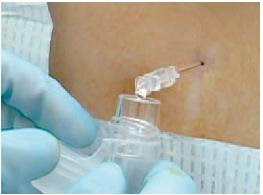
RESULTS There were 28 subjects enrolled (13 girls and 15 boys) at a median age of 5 years. The sitting-flexed position provided a significantly increased interspinous space (P < .05). Flexion of the hips increased the interspinous space in both the sitting and lateral recumbent positions (P < .05). Flexion of the neck, did not significantly change the interspinous space (P = .998).
CONCLUSIONS The interspinous space of the lumbar spine was maximally increased with children in the sitting position with flexed hips; therefore we recommend this position for lumbar punctures. In the lateral recumbent position, neck flexion does not increase the interspinous space and may increase morbidity; therefore, it is recommended to hold patients at the level of the shoulders as to avoid neckflexion.
Positioning for lumbar puncture in children evaluated by bedside ultrasound
Pediatrics. 2010 May;125(5):e1149-53
A more recent study also used ultrasound in infants to investigate the anatomic necessity and advantage derived from a tight flexed lateral recumbent position, since hypoxia has been observed in that position:
Objectives: Hypoxia has been observed when infants undergo lumbar puncture in a tight flexed lateral recumbent position. This study used sonographic measurements of lumbar interspinous spaces to investigate the anatomic necessity and advantage derived from this tight flexed positioning in infants.
Methods: This was a brief, prospective, observational study of a convenience sample of patients. Twenty-one healthy infants under 1 month of age were scanned in two positions: prone in a spine-neutral position and lateral recumbent with their knees bent into their chest and their neck flexed. In each position, a 5- to 10-MHz linear array transducer was used to scan midline along the lumbar spinous processes in the sagittal plane. The distances between the spinous processes were measured near the ligamentum flavum using the ultrasound machine’s calipers. Pulse oximetry was monitored on all infants during flexed positioning.
Results: In the spine-neutral position, all studied interspinous spaces were much wider than a 22-gauge spinal needle (diameter 0.072 cm). The mean (±SD) interspinous spaces for L3-4, L4-5, and L5-S1 in a spine-neutral position were 0.42 (±0.07), 0.37 (±0.06), and 0.36 (±0.11) cm, respectively. Flexing the infants increased the mean lumbar interspinous spaces at L3-4, L4-5, and L5-S1 by 31, 51, and 44%, respectively.
Conclusions: This study verified that tight, lateral flexed positioning substantially enhances the space between the lumbar spinous processes and that a spine-neutral position also allows for a large enough anatomic interspinous space to perform lumbar puncture. However, further clinical research is required to establish the feasibility of lumbar puncture in a spine-neutral position.
Evaluating infant positioning for lumbar puncture using sonographic measurements
Acad Emerg Med. 2011 Feb;18(2):215-8